
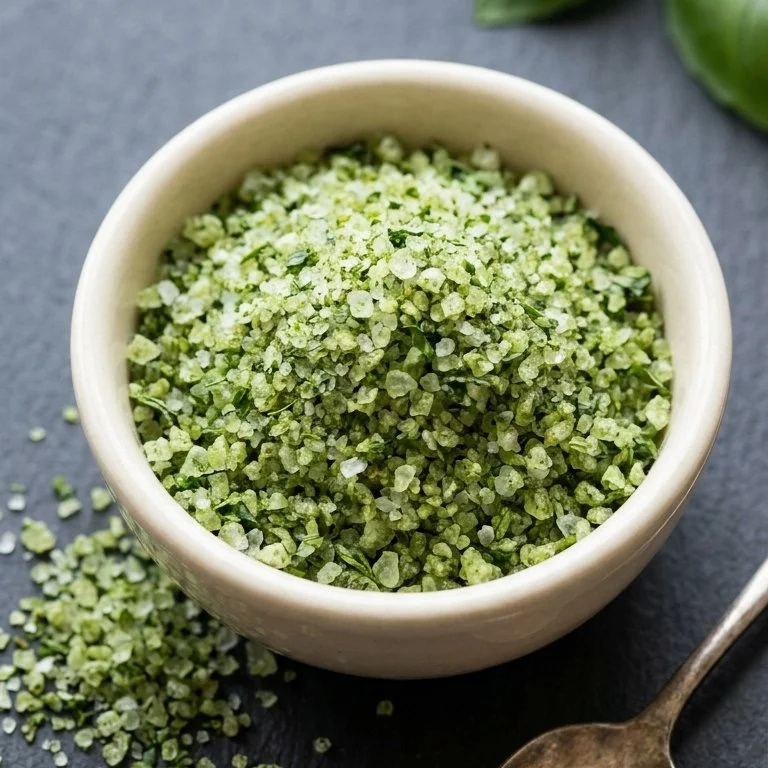
The smell of fresh basil wafts through the kitchen, enveloping you in a warm embrace. Growing up, my grandma would often sprinkle her homemade basil salt on various dishes, bringing a touch of garden freshness to every meal. It was more than just a seasoning; it was a way of connecting with the earth and the flavors of our Italian heritage. As I prepare to make this simple yet flavorful basil salt, I’m reminded of the joy that comes from creating something beautiful in my own kitchen. This recipe matters because it transforms a basic ingredient into a delightful seasoning that you can use to elevate your cooking. With only two ingredients, basil salt is not only easy to make, but it also captures the vibrant essence of basil, making every bite special.
why make this recipe
Making basil salt is a great way to preserve the fresh taste of basil. Instead of letting your basil wilt in the fridge, you can turn it into a flavorful seasoning that adds depth to your meals. It’s perfect for seasoning roasted vegetables, sprinkling on pasta, or enhancing the flavor of grilled meats. Homemade basil salt is a simple and budget-friendly way to elevate the taste of your favorite dishes.
how to make Basil Salt
Ingredients:
- 1 cup sea salt
- 1/2 cup fresh basil leaves
Directions:
- Rinse the fresh basil leaves and pat them dry.
- In a food processor, combine the basil leaves and sea salt.
- Pulse until the basil is finely chopped and well mixed with the salt.
- Spread the mixture on a baking sheet lined with parchment paper.
- Allow it to dry for a few hours or in a low oven (about 200°F) for 10-15 minutes.
- Once dry, transfer the basil salt to an airtight container for storage.
how to serve Basil Salt
You can use basil salt in many ways. Sprinkle it on your favorite pasta dishes, use it to season vegetables before roasting, or add it to marinades for chicken and fish. It adds a delightful flavor boost to any dish, making them taste even better.
how to store Basil Salt
Store your basil salt in an airtight container in a cool, dry place. This will keep it fresh for several months. You can also keep it in the refrigerator for added longevity, but it’s not necessary.
tips to make Basil Salt
- Make sure your basil leaves are completely dry before mixing them with salt; excess moisture may spoil the salt.
- Experiment with different types of salt, like Himalayan pink salt or kosher salt, to find the flavor you like best.
- If you want a more intense basil flavor, you can adjust the ratio of basil to salt.
variation
Feel free to experiment by adding other herbs like thyme, oregano, or rosemary to the salt mixture. This creates your own unique herb salt blend that can be used in a variety of dishes.
FAQs
1. Can I use dried basil instead of fresh?
Dried basil can be used, but the flavor will not be as vibrant. Fresh basil gives the best taste and aroma.
2. How long will basil salt last?
When stored in an airtight container in a cool, dry place, basil salt can last for up to six months.
3. Can I use this salt for baking?
While it’s great for many savory dishes, use it sparingly in baking since its flavor might not combine well in sweet recipes.
Print
Homemade Basil Salt
- Total Time: 25 minutes
- Yield: 1 cup 1x
- Diet: Vegetarian
Description
A simple yet flavorful seasoning that transforms fresh basil into a delightful basil salt.
Ingredients
- 1 cup sea salt
- 1/2 cup fresh basil leaves
Instructions
- Rinse the fresh basil leaves and pat them dry.
- Combine the basil leaves and sea salt in a food processor.
- Pulse until the basil is finely chopped and well mixed with the salt.
- Spread the mixture on a baking sheet lined with parchment paper.
- Allow it to dry for a few hours or in a low oven (about 200°F) for 10-15 minutes.
- Transfer the basil salt to an airtight container for storage.
Notes
Store in an airtight container in a cool, dry place for several months. You can experiment by adding other herbs for unique blends.
- Prep Time: 10 minutes
- Cook Time: 15 minutes
- Category: Seasoning
- Method: Mixing
- Cuisine: Italian
Nutrition
- Serving Size: 1 teaspoon
- Calories: 0
- Sugar: 0g
- Sodium: 0mg
- Fat: 0g
- Saturated Fat: 0g
- Unsaturated Fat: 0g
- Trans Fat: 0g
- Carbohydrates: 0g
- Fiber: 0g
- Protein: 0g
- Cholesterol: 0mg